Power Semiconductor Switch
분류 방식
1) 제어 가능성
(1) Uncontrollable Device
The turn-on and turn-off of the switch are determined by the conditions of the external voltage and current applied to the switch.
Ex.) Diode
(2) Controlled Turn ON, Uncontrolled Turn OFF Device
Under certain conditions, the switch is turned on by a control signal, but the turn-off is only done by the voltage and current conditions of the external circuit.
Ex.) SCR Thyristor
(3) Controllable Device
A device that is turned on and off by the control signal of the switch regardless of the conditions of the external circuit containing the switch.
Ex.) GTO Thyristor, MOSFET, BJT, IGCT, IGBT
2) 동작 방향성
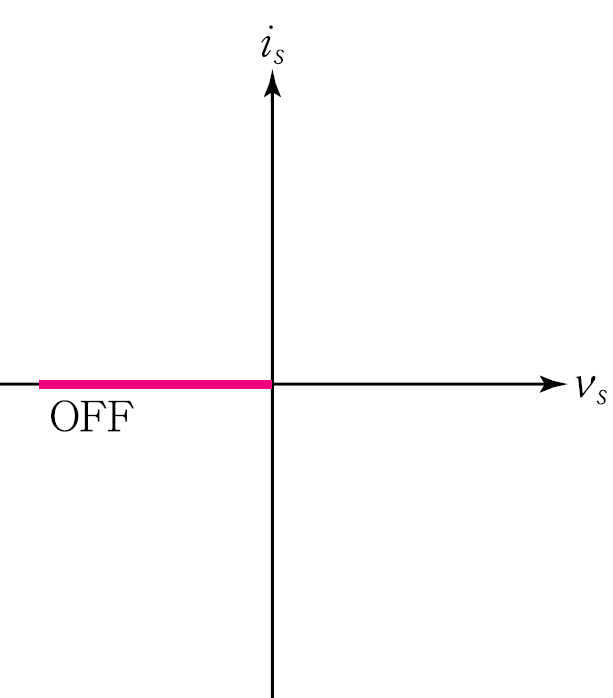
(1) 전압 저지
단방향 (Unipolar Voltage blocking Device)
A device that can withstand a voltage of unidirectional polarity applied in the off state.
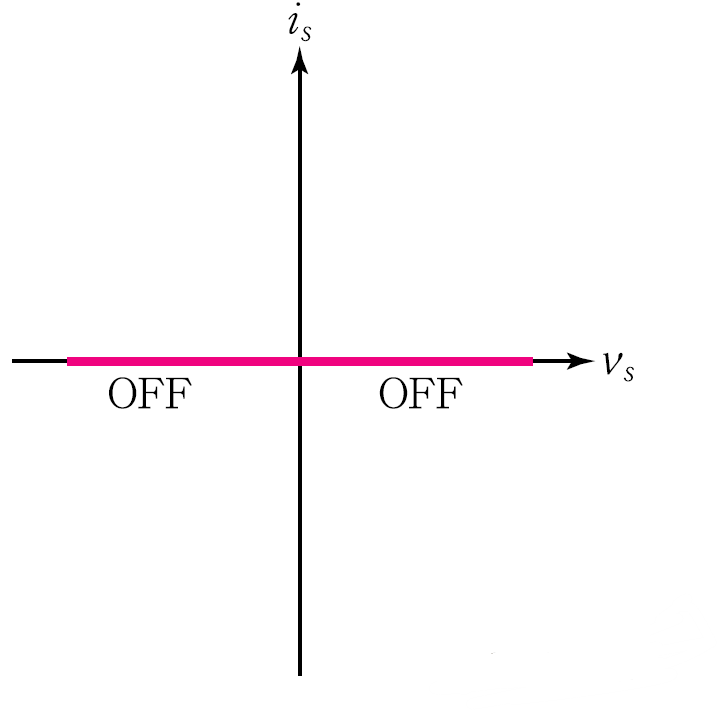
양방향 (Bidirectional Voltage blocking Device)
A device that can withstand a voltage of both polarities applied in the off state.
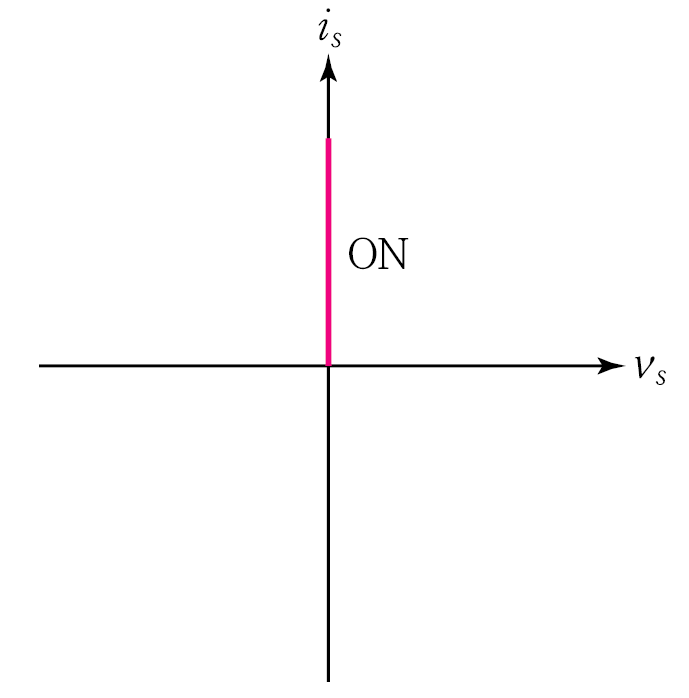
(2) 전류 허용
단방향 (Unidirectional Current flow Device)
A device that can only flow current in one direction when turned on
Ex.) Diode, SCE Thyristor, GTO Thyristor, IGCT, BJT, MOSFET
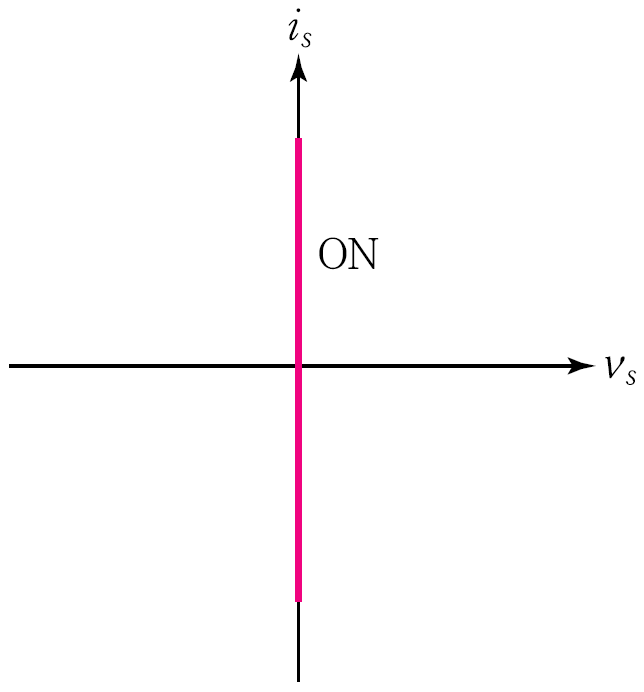
양방향 (Bidirectional Current flow Device)
A device that can conduct current in both directions when turned on
Ex.) MOSFET, Triac, 역도통 Thyristor
Reference
Power Electronics, 노의철, 정규범, 최남섭
원리로 이해하는 전력전자공학, 원충연, 김영렬, 이택기, 류홍제, 정용채
'Power Electronics' 카테고리의 다른 글
| Power Semiconductor Switch 2 (0) | 2024.10.14 |
|---|---|
| Root mean square of various waveforms (0) | 2024.10.13 |
| Complementary Switching Operation (0) | 2024.10.13 |
| PF, THD, DF, DPF (0) | 2024.10.13 |
| Type 3 Compensator Frequency Response (0) | 2024.10.02 |


